Sesbania vs Other Cover Crops and Green Manures
Where sesbania is the better choice, where another legume wins, and how to decide by climate, water and end use. For sunn hemp see the dedicated sesbania vs sunn hemp comparison.
Get a quotation on WhatsAppContact sales

On this page
- Tropical Cover Crop Comparison Chart – Rankings by Purpose
- Complete Green Manure Comparison Guide – Choosing the Best Species
- Nitrogen-Fixing Crops Compared – Finding the Most Efficient N Source
- Sesbania vs Crotalaria – Comparing Two Green Manure Champions
- Sesbania vs Cowpea as Cover Crops – Detailed Comparison
- Sesbania vs Mung Bean – Choosing the Right Legume
- Sesbania vs Guar Seeds – Which Seed Crop is Right for You?
- Sesbania vs Leucaena – Comparing Nitrogen-Fixing Trees
- Sesbania vs Gliricidia – Which Tree for Your Agroforestry System?
- Sesbania vs Moringa – Different Trees, Different Benefits
Overview comparisons
Tropical Cover Crop Comparison Chart – Rankings by Purpose
Choosing the right cover crop requires matching species characteristics to your specific objectives. This comparison ranks the major tropical cover crop species across key criteria: nitrogen fixation, weed suppression, erosion control, biomass production, cost, and ease of management.
For nitrogen fixation: Sesbania > Crotalaria > Mucuna > Cowpea > Lablab. For weed suppression: Mucuna > Lablab > Sesbania > Crotalaria > Cowpea. For erosion control: Mucuna > Cowpea > Lablab > Crotalaria > Sesbania. For biomass production: Sesbania > Crotalaria > Mucuna > Lablab > Cowpea.
Complete Green Manure Comparison Guide – Choosing the Best Species
This guide compares the major green manure species available for tropical and subtropical agriculture: Sesbania, Crotalaria (Sunn Hemp), Cowpea, Mung Bean, Lablab, Mucuna, and Tephrosia. Each species has unique strengths that make it suitable for specific conditions and farming systems.
Sesbania leads in waterlogged tolerance and nitrogen fixation rate. Crotalaria excels in nematode suppression and drought tolerance. Cowpea and mung bean offer food grain plus soil improvement. Mucuna produces the most biomass on poor soils. Lablab tolerates the widest range of conditions. Tephrosia is best for acid soils.
Nitrogen-Fixing Crops Compared – Finding the Most Efficient N Source
Biological nitrogen fixation through leguminous crops is the most sustainable and cost-effective way to supply nitrogen to farming systems. Among the major nitrogen-fixing crops, sesbania stands out for its exceptionally high fixation rates of 80-200 kg N/ha — enough to replace most or all synthetic nitrogen inputs for a subsequent cereal crop.
Comparative nitrogen fixation rates (kg N/ha/season): Sesbania 80-200, Sunn hemp 60-170, Lablab 50-150, Cowpea 40-120, Soybean 60-160, Groundnut 40-100, Mung bean 30-80. These values vary with soil conditions, climate, and management, but sesbania consistently ranks among the highest fixers.
Crop-by-crop
Sesbania vs Crotalaria – Comparing Two Green Manure Champions
Sesbania and Crotalaria (including C. juncea and C. ochroleuca) are both premier tropical green manure species. Sesbania dominates in lowland rice systems due to its waterlogging tolerance, while Crotalaria species are preferred in upland systems where their nematode-suppressive properties add value.
Biomass production is generally comparable at 15-25 tons per hectare of fresh biomass in 45-60 days. Sesbania has the edge in nitrogen fixation efficiency due to its dual nodulation system (root + stem nodules), while Crotalaria offers greater species diversity with options for different soil types and climatic conditions.
Sesbania vs Cowpea as Cover Crops – Detailed Comparison
Sesbania and cowpea (Vigna unguiculata) are both nitrogen-fixing legumes used as cover crops, but they occupy different niches. Sesbania is a tall, shrubby species that produces massive biomass in tropical conditions, while cowpea is a low-growing vine that provides excellent ground cover and also produces edible grain.
For pure green manuring efficiency, sesbania typically outperforms cowpea with higher biomass production and nitrogen fixation per hectare. However, cowpea offers the dual benefit of producing a harvestable grain crop (0.5-1.5 t/ha) in addition to its soil improvement functions, which is important for subsistence farmers.
Sesbania vs Mung Bean – Choosing the Right Legume
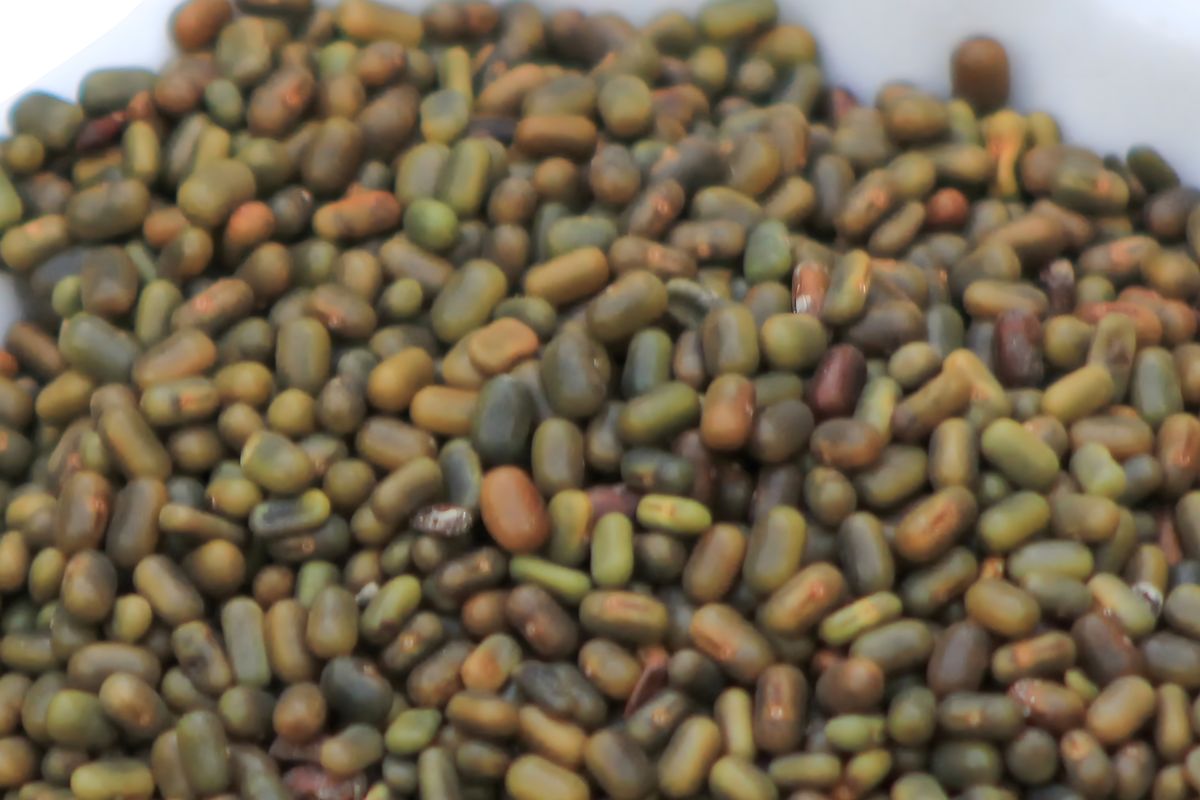
Sesbania and mung bean (Vigna radiata) serve different roles in Asian farming systems. Sesbania is grown solely for green manuring and gum production, while mung bean is primarily a food crop with secondary soil improvement benefits. However, both are commonly grown in rice-based rotations.
As a green manure, sesbania is clearly superior — producing 3-5 times more biomass and fixing 2-3 times more nitrogen than mung bean per hectare. But mung bean provides valuable food protein and generates cash income from grain sales, making it the preferred choice for food-insecure smallholder farmers.
Sesbania vs Guar Seeds – Which Seed Crop is Right for You?
Sesbania and guar (Cyamopsis tetragonoloba) are both important galactomannan-producing legumes, but they differ significantly in agronomic requirements and end-use applications. Sesbania thrives in waterlogged conditions and tropical climates, while guar is a dryland crop suited to arid and semi-arid environments.
From a gum perspective, guar seeds contain 28-33% gum with higher peak viscosity, while sesbania seeds contain 25-30% gum with faster hydration characteristics. Guar dominates the global galactomannan market, but sesbania offers a valuable alternative — especially in years of guar crop failure or price spikes.
Sesbania vs Leucaena – Comparing Nitrogen-Fixing Trees
Sesbania and leucaena (Leucaena leucocephala) are both widely used nitrogen-fixing trees in tropical agroforestry, but they differ in growth habit, management requirements, and best-use scenarios. Sesbania is short-lived (2-5 years) with rapid initial growth, while leucaena is a longer-lived perennial tree with sustained productivity over 15-20 years.
For short-term soil improvement (1-2 seasons), sesbania is superior due to its faster growth and easier incorporation. For permanent agroforestry systems including alley cropping, fodder banks, and living fences, leucaena's longevity and deeper rooting make it the better long-term investment.
Sesbania vs Gliricidia – Which Tree for Your Agroforestry System?
Sesbania and gliricidia (Gliricidia sepium) are staple species in tropical agroforestry systems. Gliricidia is favored in the Americas and parts of Africa for its durability and toxicity to rodents (the name means 'rat killer'), while sesbania is preferred in Asian systems for its rapid establishment and waterlogging tolerance.
Gliricidia is typically established from cuttings (vegetative propagation), while sesbania is established from seed. This gives gliricidia an advantage in areas where seed supply is unreliable, but means sesbania can be established more quickly and at lower cost where seeds are available.
Sesbania vs Moringa – Different Trees, Different Benefits
Sesbania and moringa (Moringa oleifera) are both fast-growing, nitrogen-fixing tropical trees, but they serve fundamentally different purposes. Moringa is primarily a nutritional powerhouse grown for its highly nutritious leaves, pods, and seeds used as food and dietary supplements.
Sesbania is primarily an agricultural and industrial crop — valued for green manuring, animal fodder, and galactomannan gum production. While sesbania leaves are also nutritious, the tree has not been marketed as a superfood the way moringa has, and its primary value lies in soil improvement and industrial applications.
Frequently asked questions
How do I get a price for sesbania seeds?
Send the species, quantity in metric tons and destination port by WhatsApp (+92 310 4929292) or email [email protected]. Quotations are issued on FOB Karachi or CIF terms.
Which sesbania species does Kohenoor International export?
Sesbania sesban, Sesbania grandiflora, Sesbania bispinosa (dhaincha, also sold as jantar), Sesbania aculeata and Sesbania rostrata.
Which documents ship with an order?
Commercial invoice, packing list, bill of lading, certificate of origin, phytosanitary certificate and fumigation certificate, with a seed analysis report on request.