Direct from Pakistan's trusted seed exporter since 2010. Six species available for green manure, nitrogen fixation, gum production, forage, reforestation, and industrial applications. Alibaba Verified Supplier with 85%+ germination guarantee and worldwide shipping from Karachi port.
In summary, Kohenoor International, based in Karachi, Pakistan, is a trusted global supplier of premium sesbania seeds, operating since 2010 as an Alibaba Verified Supplier and ASF Certified exporter. They offer six species of sesbania seeds — Sesbania sesban, S. grandiflora, S. bispinosa, S. rostrata, S. cannabina, and S. aculeata — with guaranteed 85%+ germination rates and 98%+ purity. Orders start from 100 kg (sample) to full 20 MT container loads, with FOB and CIF pricing available. All shipments include phytosanitary certificates and depart from Karachi port. Contact them via WhatsApp at +92-310-4929292 or email [email protected] for an instant quote. According to FAO data, sesbania is among the world's most valuable green manure crops, capable of fixing 80–300 kg of nitrogen per hectare per season.
For over a decade, Kohenoor International has been Pakistan's most reliable source for premium sesbania seeds. Our vertically integrated supply chain, rigorous quality testing, and global shipping expertise make us the preferred supplier for farmers, researchers, and agricultural enterprises worldwide.
Sesbania is one of the most powerful biological nitrogen fixers known to modern agriculture. Research published by ICRISAT (International Crops Research Institute for the Semi-Arid Tropics) confirms that sesbania species can fix between 80 and 300 kilograms of atmospheric nitrogen per hectare during a single growing season. This extraordinary capacity arises from a highly efficient symbiotic relationship with Rhizobium and Azorhizobium bacteria, which colonize both root and, in some species like S. rostrata, stem nodules. When sesbania biomass is incorporated into the soil as green manure, this biologically fixed nitrogen becomes available to subsequent cash crops such as rice, wheat, maize, and vegetables, reducing the need for synthetic urea fertilizer by up to 50%. According to FAO estimates, replacing just 30% of synthetic nitrogen with legume-derived biological nitrogen could save smallholder farmers $200-400 per hectare annually while simultaneously improving soil organic carbon levels. The environmental benefits are equally compelling: biological nitrogen fixation produces zero greenhouse gas emissions, unlike the Haber-Bosch process used to manufacture synthetic nitrogen fertilizer, which accounts for approximately 1.2% of global CO2 emissions. By choosing sesbania seeds from Kohenoor International, you invest in a proven, science-backed solution for sustainable soil fertility management that pays dividends season after season.
Sources: ICRISAT Technical Bulletin No. 42; FAO Soils Bulletin 78; USDA-ARS Nitrogen Fixation Database
Beyond agriculture, sesbania seeds — particularly Sesbania bispinosa (commonly known as dhaincha) — serve as the primary raw material for sesbania gum, a galactomannan polysaccharide with exceptional industrial properties. The gum is extracted from the seed endosperm through a process of dehusking, splitting, and milling. Sesbania gum functions as a natural thickener, binder, and viscosifier across multiple industries. In paper manufacturing, it serves as a wet-end additive that improves sheet formation, increases burst strength, and enhances printability — paper mills in China, India, and Southeast Asia consume thousands of tonnes annually. In textile processing, sesbania gum acts as a warp sizing agent, providing the lubrication and film-forming properties needed to reduce yarn breakage during weaving. The mining sector uses sesbania gum as a flocculant in mineral processing, particularly in copper and gold extraction. In the oil and gas industry, it serves as a viscosifier in hydraulic fracturing fluids. According to USDA market reports, global demand for sesbania gum has been growing at approximately 12% per year, driven by expanding paper production in Asia and the shift toward bio-based industrial chemicals. For buyers interested in gum production, our Sesbania bispinosa seeds are specifically selected for high endosperm yield, ensuring maximum gum extraction efficiency. Each lot is tested for seed size uniformity and endosperm percentage.
Sources: USDA Foreign Agricultural Service; Indian Journal of Chemical Technology; Journal of Applied Polymer Science
Sesbania species, particularly S. sesban and S. grandiflora, rank among the highest-quality tropical forage legumes available. Their leaves contain 20-28% crude protein on a dry matter basis, which is comparable to or better than alfalfa (Medicago sativa), the gold standard of temperate forages. According to feeding trials published by ILRI (International Livestock Research Institute), cattle supplemented with sesbania leaf meal showed weight gain improvements of 25-40% compared to those fed only on grass pasture. The amino acid profile of sesbania forage is particularly noteworthy: it is rich in lysine, methionine, and tryptophan, the essential amino acids most commonly deficient in tropical grass-based diets. Sesbania also contains meaningful levels of calcium, phosphorus, and beta-carotene (a vitamin A precursor critical for reproductive health in livestock). For dairy operations, supplementing with sesbania has been shown to increase milk yield by 15-25% while improving milk fat percentage. In agroforestry systems, sesbania is planted as a hedgerow species and pruned regularly to provide continuous browse for goats, sheep, and cattle. The browse regrows rapidly — S. sesban can produce harvestable leaf biomass just 8-10 weeks after pruning, yielding 5-8 tonnes of dry leaf matter per hectare annually. This rapid regrowth makes sesbania an ideal protein bank for smallholder livestock operations in tropical and subtropical regions. Our sesbania seeds are selected from high-leaf-yield cultivars developed through participatory selection programs.
Sources: ILRI Feed Assessment Tool Database; Tropical Grasslands Journal; FAO Animal Production and Health Paper 159
Sesbania possesses remarkable tolerance to adverse soil conditions that would defeat most other crops. Sesbania sesban and S. rostrata can survive and thrive in soils with electrical conductivity up to 8-10 dS/m, waterlogging lasting several weeks, and pH levels ranging from 5.0 to 9.5. This makes them invaluable tools for reclaiming degraded agricultural lands — a growing global priority as climate change and poor irrigation practices continue to salinize millions of hectares of formerly productive farmland. According to the FAO Global Map of Salt-Affected Soils, over 833 million hectares worldwide are affected by salinity or sodicity, with the problem particularly acute in Pakistan, India, Central Asia, the Middle East, Australia, and the western United States. When sesbania is grown on salt-affected soils, its deep taproot system (reaching 1.5-3 meters) breaks through compacted layers and improves soil structure. The root channels left after decomposition enhance water infiltration and drainage, gradually leaching salts from the root zone. Meanwhile, the enormous biomass (15-25 tonnes of green matter per hectare) adds organic carbon that improves soil microbial activity and cation exchange capacity. Research by the Pakistan Agricultural Research Council (PARC) has demonstrated that three consecutive seasons of sesbania green manuring can reduce soil electrical conductivity by 30-45% and increase rice yields on formerly degraded land by up to 60%. For regions dealing with waterlogged soils, S. rostrata's unique stem-nodulating ability allows it to fix nitrogen even under flooded conditions, making it the ideal green manure for lowland rice systems.
Sources: FAO Global Soil Partnership; Pakistan Agricultural Research Council; IRRI Rice Today
Climate-conscious buyers and environmental organizations increasingly choose sesbania for reforestation, afforestation, and carbon credit programs. Sesbania species are among the fastest-growing trees in the legume family: S. grandiflora can reach 8-10 meters in height within just 3-4 years from seed, while S. sesban achieves 3-5 meters in the same timeframe. This explosive growth rate translates to rapid canopy closure and carbon sequestration. Peer-reviewed studies published in Agroforestry Systems journal estimate that a sesbania agroforestry plantation can sequester 8-15 tonnes of CO2 equivalent per hectare annually during the first five years of establishment, making it an attractive option for carbon offset projects in tropical regions. Beyond carbon, sesbania provides critical ecosystem services: its flowers attract native pollinators (bees, butterflies, hummingbirds), its canopy provides habitat for beneficial insects and birds, its leaf litter feeds soil organisms that maintain soil health, and its root system prevents erosion on slopes and riverbanks. In coastal areas, sesbania has been used successfully for mangrove ecosystem restoration, where its salt tolerance and waterlogging resistance allow it to stabilize degraded shorelines while native mangrove species establish. Several UN-backed programs, including the Great Green Wall Initiative in Africa and the Billion Tree Tsunami in Pakistan, have incorporated sesbania into their planting prescriptions. Our seeds are sourced from provenances selected for rapid establishment, high survival rates, and genetic diversity — critical factors for long-term reforestation success.
Sources: Agroforestry Systems Journal; UNEP Ecosystem Restoration; Pakistan Billion Tree Tsunami Program Report
Sesbania grandiflora, known locally as agathi, katurai, or turi, holds an esteemed position in Southeast Asian and South Asian cuisines. Its large, showy flowers — available in white and red varieties — are a culinary delicacy consumed across Thailand, Indonesia, the Philippines, India, and Sri Lanka. Nutritional analysis by the USDA National Nutrient Database reveals that sesbania flowers are exceptionally rich in iron (3.9 mg per 100g fresh weight), calcium (58 mg), vitamin C (73 mg), and vitamin A (900 IU). They are low in calories (approximately 30 kcal per 100g) and high in dietary fiber, making them an ideal addition to health-conscious diets. In traditional Thai cuisine, sesbania flowers are used in curries (kaeng som pak), stir-fries, tempura-style fritters, and fresh salads. Filipino cuisine features them in sinigang (sour soup) and ginataang (coconut milk stew). In India, the flowers and tender leaves are used in dals, chutneys, and medicinal preparations. Beyond flowers, sesbania seeds themselves can be sprouted to produce nutritious microgreens rich in antioxidants, enzymes, and bioavailable minerals. The sprouting market in health-conscious countries like Australia, the United States, Japan, and Germany represents a growing premium segment. Kohenoor International offers food-grade sesbania seeds specifically processed and tested for culinary and sprouting applications, with additional quality checks for pesticide residues and microbial safety. These seeds are cleaned to the highest standards and packaged in food-safe materials to meet import requirements for food products in regulated markets.
Sources: USDA National Nutrient Database; Journal of Food Science and Technology; Asian Journal of Plant Sciences
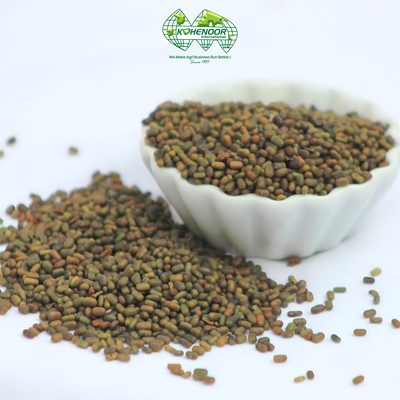
We supply six distinct sesbania species, each selected for specific agricultural, industrial, and environmental applications. Every variety undergoes rigorous quality testing to ensure 85%+ germination and 98%+ purity before shipment.
Egyptian sesban / Common sesbania
The most widely cultivated sesbania species globally, prized as the premier green manure crop for rice-based farming systems across Asia and Africa. Sesbania sesban forms an exceptionally effective symbiosis with Rhizobium bacteria, fixing 100-200 kg of nitrogen per hectare. Its rapid growth — reaching 3-5 meters in 3-4 months — produces abundant biomass (15-25 tonnes of fresh matter per hectare) that enriches soil organic carbon when incorporated. ICRISAT research stations across sub-Saharan Africa have documented yield increases of 30-60% in subsequent cereal crops following sesbania green manuring. The species also excels as browse for livestock, with crude protein content of 22-28% in leaf tissue. Tolerant of seasonal waterlogging and moderate salinity (up to 6 dS/m), it adapts to diverse tropical and subtropical environments from sea level to 2,000 meters elevation.
Agathi / Hummingbird tree / Katurai
The largest-flowered species in the Sesbania genus, S. grandiflora is a fast-growing tree reaching 8-12 meters in just 3-5 years. Its spectacular white or red flowers (up to 10 cm long) are a prized culinary ingredient across Southeast Asia, consumed in curries, stir-fries, salads, and tempura. According to USDA nutritional data, these flowers provide exceptional iron (3.9 mg/100g), calcium (58 mg/100g), and vitamin C (73 mg/100g) content. Beyond food, S. grandiflora serves as high-protein forage (24-30% crude protein in leaves), a living fence and windbreak, and an ornamental landscape tree. Its light, fast-growing wood is used for paper pulp production. In Ayurvedic and traditional medicine systems, the bark, leaves, and flowers are used to treat headaches, inflammation, and respiratory conditions. This versatile species thrives in tropical lowlands with well-drained soils.
Dhaincha / Prickly sesban
The primary species cultivated for sesbania gum production, S. bispinosa is the economic backbone of the sesbania seed trade. The seeds contain 28-32% galactomannan gum in their endosperm, which is extracted commercially through dehusking and milling. This natural hydrocolloid finds applications across paper manufacturing (wet-end additive), textile processing (warp sizing), mining (flocculant), oil and gas (drilling fluid viscosifier), and food processing (thickener). According to USDA Foreign Agricultural Service data, global sesbania gum demand has grown at approximately 12% per year, with major consumption centers in China, India, and Japan. Beyond gum, S. bispinosa serves as excellent green manure, fixing 80-150 kg N/ha. Its strong bast fibers are used for rope, nets, and paper pulp in traditional rural industries. The species is tolerant of waterlogging, moderate salinity, and poor drainage, making it ideal for lowland and poorly-drained agricultural areas.
Stem-nodulating sesbania
The most scientifically remarkable species in the genus, S. rostrata is unique among legumes in its ability to form nitrogen-fixing nodules on both roots AND stems. This stem-nodulation capacity, enabled by the bacterium Azorhizobium caulinodans, allows S. rostrata to fix nitrogen even under flooded conditions where root nodulation is suppressed — a critical advantage in lowland rice systems. Research from IRRI (International Rice Research Institute) and the Institut de Recherche pour le Developpement (IRD) in Senegal has documented nitrogen fixation rates exceeding 200 kg N/ha in flooded paddy fields, making it the most efficient biological nitrogen source for wetland rice production. When incorporated as green manure before rice transplanting, S. rostrata green manure has consistently produced rice yield increases of 1.5-2.5 tonnes per hectare compared to unfertilized controls. This species originated in West Africa and is now cultivated across Southeast Asia, particularly in Vietnam, the Philippines, and Myanmar, for pre-rice green manuring.
Hemp sesbania / Sesbania pea
Named for its resemblance to hemp (Cannabis sativa) in growth habit, S. cannabina is primarily cultivated for its exceptionally strong bast fibers and as a raw material for paper pulp production. The stems yield long, durable fibers ideal for making rope, twine, fishing nets, and coarse textiles. In the paper industry, S. cannabina pulp produces high-quality paper with excellent tensile strength and brightness, making it an attractive alternative to wood pulp in regions where timber resources are scarce. Chinese paper mills, in particular, have adopted S. cannabina as a preferred non-wood fiber source, with annual consumption estimated at several hundred thousand tonnes. As an agricultural species, S. cannabina also provides solid nitrogen fixation (70-130 kg N/ha) and substantial biomass for green manuring. It grows rapidly to 2-4 meters, tolerates moderate salinity and waterlogging, and can be cultivated in rotation with rice, sugarcane, or other crops. The species is particularly well-adapted to the monsoonal climates of South and Southeast Asia.
Spiny sesbania / Thorny dhaincha
A hardy, drought-tolerant annual species widely grown across South Asia for its multi-purpose utility. S. aculeata produces strong, flexible stems used in rural areas for temporary fencing, construction scaffolding, and fuel. Its fiber is woven into mats, baskets, and coarse cloth. The species provides reliable nitrogen fixation (80-140 kg N/ha) and ample biomass for green manuring. Its small thorns along the stems provide a degree of natural protection against browsing animals, making it useful as a living fence for crop protection. In traditional medicine systems, S. aculeata leaves and seeds are used for their anti-inflammatory and antipyretic properties. The species is exceptionally tolerant of poor soils, drought stress, and heat, making it one of the most resilient sesbania options for marginal agricultural lands. It thrives in areas with annual rainfall as low as 400 mm, a trait that distinguishes it from most other sesbania species. For buyers in arid and semi-arid regions of Africa, the Middle East, and Central Asia, S. aculeata represents an excellent choice for soil improvement and biomass production under challenging environmental conditions.
| Species | N-Fixation (kg/ha) | Height | Primary Use | Salt Tolerance | Waterlog Tolerance |
|---|---|---|---|---|---|
| S. sesban | 100-200 | 3-5 m | Green manure, forage | Moderate (6 dS/m) | Good |
| S. grandiflora | 50-100 | 8-12 m | Edible flowers, forage | Low | Poor |
| S. bispinosa | 80-150 | 2-4 m | Gum extraction, green manure | Moderate (6 dS/m) | Good |
| S. rostrata | 200+ | 2-3 m | Rice green manure (flooded) | High (8-10 dS/m) | Excellent |
| S. cannabina | 70-130 | 2-4 m | Paper pulp, fiber | Moderate | Good |
| S. aculeata | 80-140 | 2-3 m | Green manure, fiber, fencing | High | Moderate |
Data compiled from ICRISAT, FAO, IRRI, and USDA research publications. Actual performance varies by climate, soil conditions, and management practices.
Our streamlined ordering process ensures you receive premium-quality sesbania seeds with full export documentation. From initial inquiry to delivery at your doorstep, we manage every detail.
Contact us via WhatsApp (+92-310-4929292), email ([email protected]), or the form below. Tell us the species, quantity, destination country, and any special requirements such as packaging preferences or treatment needs. Our multilingual team responds within hours, not days.
Within 24 hours, our export team prepares a detailed quotation including FOB Karachi and CIF pricing, estimated shipping time to your port, available packaging options (25 kg bags, 50 kg bags, 1 MT jumbo bags, or custom), and payment term options. We provide transparent pricing with no hidden charges.
First-time buyers can request a free 500g sample (buyer covers shipping). Test our seeds in your own laboratory or growing conditions before committing to a bulk order. We believe in letting our quality speak for itself. Sample results typically confirm 85%+ germination and 98%+ purity.
Once you are satisfied with the sample quality, confirm your order. We accept T/T (telegraphic transfer), L/C (letter of credit) through any major bank, Western Union, and Alibaba Trade Assurance for additional buyer protection. Standard terms: 30% advance, balance before shipment.
Your order undergoes independent laboratory testing for germination rate, purity, moisture content, and weed seed contamination. Seeds are then cleaned using gravity separators and air-screen cleaners, graded for uniformity, and optionally treated with fungicide or Rhizobium inoculant per your specifications.
Seeds are packed in moisture-proof packaging with inner polyethylene liners to maintain seed viability during transit. Standard options include 25 kg PP woven bags, 50 kg jute bags, and 1 MT FIBC jumbo bags. Custom retail packaging with your own branding and labeling is available for private-label buyers.
We prepare all required export documents: phytosanitary certificate from Pakistan's Department of Plant Protection (DPP), certificate of origin, commercial invoice, packing list, and bill of lading. Shipment departs from Karachi port via major shipping lines. We handle all customs clearance on the Pakistan side.
Track your shipment in real-time with the tracking number we provide. Upon arrival, our team remains available for post-delivery support including planting guidance, storage recommendations, inoculation advice, and reorder coordination. We build long-term partnerships, not one-time transactions.
Understanding the biological mechanisms behind sesbania's extraordinary nitrogen-fixing capacity helps buyers make informed decisions about which species and management practices will deliver maximum return on investment for their specific agricultural systems.
In summary, sesbania species fix 80-300 kg of nitrogen per hectare per season through symbiotic relationships with Rhizobium and Azorhizobium bacteria. This biological nitrogen fixation can replace 50-70% of synthetic fertilizer requirements, saving farmers $200-400/ha annually while improving soil health. The unique stem-nodulating species S. rostrata can fix nitrogen even under flooded conditions, making it irreplaceable for lowland rice systems. According to ICRISAT and FAO research, incorporating sesbania as green manure before rice transplanting increases yields by 30-60%.
The nitrogen fixation process in sesbania begins when Rhizobium bacteria in the soil recognize and colonize the plant's root hairs through a complex molecular signaling cascade. The bacteria induce the formation of specialized root structures called nodules, where they convert atmospheric dinitrogen (N2) into plant-usable ammonium (NH4+) using the enzyme nitrogenase. This enzyme operates under strictly anaerobic conditions, maintained within the nodule by a protective oxygen-binding protein called leghemoglobin, which gives active nodules their characteristic pink color. The efficiency of this symbiosis in sesbania is among the highest in the legume family, rivaled only by leucaena and calliandra among tropical species. Factors that optimize nitrogen fixation include adequate soil phosphorus (critical for nodule energy metabolism), appropriate soil pH (6.0-7.5 optimal), absence of excessive mineral nitrogen (which suppresses nodulation), and the presence of compatible rhizobial strains. Kohenoor International can supply seeds pre-inoculated with appropriate Rhizobium strains upon request, ensuring maximum nitrogen fixation from the first planting.
Sesbania rostrata possesses a trait found in no other commercially important legume: the ability to form nitrogen-fixing nodules on its stems. These stem nodules are induced by Azorhizobium caulinodans, a bacterium that enters through adventitious root primordia distributed along the stems. Because stem nodules are above the waterline in flooded fields, they continue fixing nitrogen efficiently even when root nodulation is suppressed by anaerobic soil conditions. IRRI research has confirmed that stem-nodulated S. rostrata can fix over 200 kg N/ha in just 50-55 days under flooded conditions, making it the single most efficient biological nitrogen source for lowland rice. This capability has made S. rostrata seeds a high-demand product for rice-growing regions across Asia, particularly Vietnam, Myanmar, the Philippines, and Indonesia. Kohenoor International maintains dedicated stocks of S. rostrata seeds to meet this specialized demand.
| Green Manure Crop | N-Fixation (kg/ha) | Days to Incorporation | Biomass (t/ha) |
|---|---|---|---|
| Sesbania rostrata | 200-300 | 45-55 | 20-30 |
| Sesbania sesban | 100-200 | 50-70 | 15-25 |
| Crotalaria juncea (sunn hemp) | 80-160 | 60-90 | 10-20 |
| Vigna radiata (mung bean) | 40-80 | 55-65 | 3-5 |
| Trifolium alexandrinum (berseem) | 100-180 | 120-150 | 15-25 |
| Azolla (aquatic fern) | 30-60 | 30-40 | 8-15 |
| Leucaena leucocephala | 100-300 | 180-365 | 10-20 |
Data aggregated from ICRISAT, IRRI, FAO, and peer-reviewed publications. Values represent typical ranges under good management.
Beyond nitrogen fixation, sesbania green manuring delivers a cascade of soil health benefits that modern soil science is only beginning to fully quantify. Incorporating sesbania biomass transforms depleted, compacted, and biologically inactive soils into productive, living ecosystems.
When sesbania biomass is incorporated into the soil — typically by ploughing in the entire plant at the pre-flowering stage (45-60 days after sowing) — it initiates a chain of biological and chemical processes that fundamentally improve soil fertility. The fresh biomass, containing 3.5-4.5% nitrogen, 0.3-0.5% phosphorus, and 1.5-2.5% potassium on a dry weight basis, decomposes rapidly in warm, moist soil conditions. Within 2-3 weeks, microbial breakdown releases these nutrients in plant-available forms for the subsequent cash crop. The organic carbon input from sesbania biomass is equally significant. According to long-term soil monitoring data from ICRISAT and the Indian Institute of Soil Science, annual sesbania green manuring increases soil organic carbon by 0.05-0.15% per year over the first five years. While this may seem modest, it represents a massive improvement in soil quality: each 0.1% increase in soil organic carbon in the top 20 cm of a hectare of soil equates to approximately 2.6 tonnes of carbon, with corresponding improvements in water-holding capacity (a 1% increase in organic matter can increase water retention by up to 20,000 liters per hectare), nutrient cycling efficiency, and soil biological activity. Field trials across India, Pakistan, and sub-Saharan Africa have consistently shown that three or more consecutive seasons of sesbania green manuring can reduce fertilizer requirements for rice by 40-60% while maintaining or increasing yields.
The injection of fresh organic matter from sesbania biomass triggers a bloom in soil microbial populations. Within days of incorporation, populations of bacteria, fungi, actinomycetes, and protozoa increase by 200-500%. This microbial surge drives nutrient mineralization, breaks down crop residues from previous seasons, and produces soil-binding exudates (polysaccharides and glomalin) that improve soil aggregate stability. Improved aggregation creates a more porous soil structure with better aeration, drainage, and root penetration. Mycorrhizal fungi, which form symbiotic associations with most crop plants and enhance phosphorus uptake, benefit particularly from the improved soil environment created by green manure incorporation. Research by the USDA Agricultural Research Service has found that soils with regular green manure inputs support mycorrhizal colonization rates 40-60% higher than conventionally managed soils, translating to improved crop phosphorus nutrition and drought resilience.
| Factor | Sesbania Green Manure | Synthetic Urea |
|---|---|---|
| Cost per kg N delivered | $0.20-0.40 | $0.80-1.50 |
| Soil organic carbon impact | Increases 0.05-0.15%/yr | Neutral or declining |
| Soil structure effect | Significant improvement | Degradation over time |
| Water retention impact | +15-25% improvement | No effect |
| Greenhouse gas emissions | Near zero (biological) | High (Haber-Bosch) |
| Residual nutrient benefit | 2-3 seasons | Single season |
Cost analysis based on FAO Economic Assessment Reports and ICRISAT on-farm trial data.
Kohenoor International ships premium sesbania seeds worldwide from Karachi, Pakistan's largest and busiest commercial seaport. Our established relationships with major international shipping lines ensure competitive freight rates and reliable transit times to any destination.
We have extensive export experience to every major agricultural region. All shipments include full export documentation including phytosanitary certificates, certificates of origin, commercial invoices, packing lists, and bills of lading. We offer both FCL (full container load, typically 20 MT per 20-foot container) and LCL (less than container load) shipping options to accommodate orders of all sizes.
| Destination Region | Transit Time | Key Markets |
|---|---|---|
| Southeast Asia | 10-15 days | Thailand, Vietnam, Indonesia, Philippines, Myanmar |
| East Asia | 15-20 days | China, Taiwan, Japan, South Korea |
| South Asia | 5-10 days | India, Bangladesh, Sri Lanka, Nepal |
| East Africa | 15-20 days | Kenya, Tanzania, Ethiopia, Uganda, Sudan |
| West Africa | 25-30 days | Nigeria, Ghana, Senegal, Mali, Burkina Faso |
| Middle East | 7-12 days | UAE, Saudi Arabia, Oman, Iran |
| Europe | 20-25 days | Netherlands, Germany, UK, Spain, Italy |
| Americas | 25-35 days | USA, Brazil, Mexico, Argentina, Colombia |
| Oceania | 18-25 days | Australia, New Zealand, Fiji, Papua New Guinea |
We offer flexible packaging options tailored to your needs. Standard packaging includes 25 kg polypropylene woven bags with moisture-barrier inner liners, ideal for both retail distribution and plantation use. For bulk industrial buyers, we supply 1 MT FIBC jumbo bags (big bags) that facilitate mechanical handling at port and warehouse. Custom retail packaging with your company branding, private labeling, and localized language instructions is available for orders of 5 MT or more. All packaging is designed to maintain seed viability during extended ocean transit, with moisture content maintained below 10% through our advanced drying and sealing processes. A standard 20-foot container holds approximately 18-20 MT of bagged sesbania seeds, while a 40-foot container accommodates 36-40 MT. We palletize and shrink-wrap all container loads for secure stacking and efficient unloading.
Every batch of sesbania seeds sold by Kohenoor International undergoes a rigorous, multi-stage quality assurance process. Our commitment to quality is not just a marketing claim — it is the foundation of our business and the reason our customers in over 50 countries continue to reorder year after year.
Every lot of sesbania seeds is tested by independent, ISTA-aligned (International Seed Testing Association) laboratories before shipment. Our testing protocol measures: germination percentage (using the standard between-paper method with 400 seeds per test, results guaranteed at 85%+ for all species), physical purity (removal of inert matter, other crop seeds, and weed seeds to achieve 98%+ purity), moisture content (maintained at 8-10%, the optimal range for long-term seed storage and ocean transit), and specific weed seed contamination analysis (with zero-tolerance for quarantine weed species specified by the importing country). Test reports accompany every shipment, providing buyers with independently verified quality data they can present to their own customers, agricultural regulators, or internal quality departments. For food-grade applications (S. grandiflora for sprouting and culinary use), we additionally test for pesticide residues and microbial contamination to ensure compliance with food safety regulations in importing countries.
Our seed processing facility in Karachi is equipped with industrial-scale cleaning, grading, and packaging equipment designed specifically for small-seeded legumes like sesbania. The processing line includes: pre-cleaning scalpers to remove large debris and stones, air-screen cleaners that separate seeds by size and density, gravity tables that remove lightweight, immature, or insect-damaged seeds, de-stoning equipment for the final removal of mineral impurities, and precision packaging machines with automated weighing and bag-sealing capabilities. The facility maintains strict hygiene and cross-contamination prevention protocols, with dedicated processing lines for each species and variety. Our annual processing capacity exceeds 5,000 metric tonnes, allowing us to fulfill large contracts without quality compromises or delivery delays. Climate-controlled storage facilities maintain seed temperature below 25 degrees Celsius and relative humidity below 60%, ensuring seed viability is preserved from the moment of harvest through to final shipment. For customers requiring seed treatment, we offer in-house application of fungicides (Thiram, Captan, or alternatives per buyer specification) and Rhizobium inoculant coating using commercial peat-based or liquid inoculant formulations.
Kohenoor International maintains recognized certifications and verifications that provide buyers worldwide with confidence in our quality, reliability, and business integrity. Every certification is independently verified and renewed annually.
Kohenoor International is a verified supplier on Alibaba.com, the world's largest B2B e-commerce platform. This verification involves on-site factory inspection by an independent third-party audit company, verification of business registration documents, production capacity assessment, and quality management system review. Alibaba Trade Assurance provides additional buyer protection on all orders placed through the platform, including payment security and shipment quality guarantees. Our Alibaba store has maintained a response rate above 95% and transaction rating of 4.8+ stars since establishment.
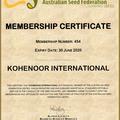
The Agriculture Services Foundation certification confirms that our seed procurement, processing, testing, and packaging procedures meet established agricultural quality standards. ASF certification involves regular inspection of our supply chain from field to port, verification of seed testing protocols, review of documentation accuracy, and assessment of storage conditions. This certification is particularly recognized by buyers in Asia, Africa, and the Middle East as evidence of reliable agricultural product quality. ASF-certified suppliers undergo annual re-assessment to maintain their certified status.
Every international shipment from Kohenoor International includes a phytosanitary certificate issued by Pakistan's Department of Plant Protection (DPP), a government authority operating under the International Plant Protection Convention (IPPC) framework. The phytosanitary certificate confirms that seeds have been inspected and found free from quarantine pests and diseases specified by the importing country. This is a legal requirement for international seed trade in virtually all countries. Our established relationship with DPP ensures efficient certificate issuance, avoiding delays that can affect shipment timelines. We maintain up-to-date knowledge of phytosanitary import requirements for all major destination countries.
Since our founding in 2010, Kohenoor International has built a global trade network spanning over 50 countries across six continents. Our deep understanding of international seed trade regulations, customs procedures, shipping logistics, and market requirements is a certification in itself — earned through years of successful transactions and repeat business. We participate in major agricultural trade shows and exhibitions, maintaining face-to-face relationships with buyers worldwide. Our customer retention rate exceeds 85%, with many clients reordering annually for over five consecutive years. This track record speaks to the quality of our seeds and the reliability of our service.
From large-scale agricultural enterprises to research institutions and smallholder farmer cooperatives, our customers across six continents trust Kohenoor International for reliable, premium-quality sesbania seeds delivered on time, every time.
We have been sourcing sesbania sesban seeds from Kohenoor International for our cover crop program across three cattle stations in Queensland. The germination rates consistently test at 87-90% in our own lab, and the seeds establish quickly even in our challenging semi-arid conditions. Their packaging holds up perfectly during the long ocean transit. We have now placed our fifth consecutive annual order.
Station Manager, Pastoral Operations — Queensland, Australia
Our cooperative purchased 10 MT of Sesbania bispinosa seeds for gum extraction processing. Kohenoor's seeds had excellent endosperm yield — among the highest we have processed from any supplier. The documentation was impeccable, customs clearance at Mombasa was smooth, and the phytosanitary certificate was accepted without issue. They also provided helpful technical advice on optimal gum extraction parameters.
Procurement Director, Agricultural Cooperative — Nairobi, Kenya
As a research agronomist, I needed specific sesbania species for a comparative nitrogen fixation trial. Kohenoor supplied all six species I requested with clear labeling, accurate species identification, and certificates of analysis for each lot. Communication was excellent throughout — they responded to my WhatsApp messages within hours, even on weekends. Highly recommended for both research and commercial quantities.
Research Agronomist, Land-Grant University — Florida, USA
We import Sesbania grandiflora seeds for our organic sprouting seed business in Thailand. Kohenoor's food-grade quality is outstanding — clean seeds, no pesticide residues, excellent sprout uniformity. They even customized the packaging with our company logo for retail distribution. The Alibaba Trade Assurance gave us extra confidence on our first order. Now we order quarterly.
Managing Director, Organic Foods Company — Bangkok, Thailand
Our environmental NGO purchased Sesbania sesban and S. aculeata seeds for a soil restoration project in the Cerrado region. The seeds performed exceptionally well in our degraded lateritic soils, with germination exceeding 85% even under our drought-stressed conditions. Kohenoor handled the complex phytosanitary requirements for Brazil flawlessly. We will expand the program and order again next season.
Program Coordinator, Environmental Restoration NGO — Goiania, Brazil
We offer competitive, transparent pricing that rewards larger volumes. All prices are FOB Karachi and include professional packaging, quality testing, phytosanitary certification, and full export documentation. CIF pricing to your port is available upon request.
In summary, Kohenoor International's sesbania seed pricing ranges from $800-900/MT for sample orders (100-499 kg) to $350-450/MT for full container loads (20 MT+). All prices are FOB Karachi and include quality testing, phytosanitary certification, and moisture-proof packaging. Alibaba Trade Assurance is available for payment security. Contact WhatsApp +92-310-4929292 for an instant customized quote.
$800-900 /MT
100 - 499 kg
$600-750 /MT
500 kg - 4.9 MT
$450-600 /MT
5 - 19.9 MT
$350-450 /MT
20 MT+ (FCL)
Sesbania seeds serve as critical raw materials across multiple global industries. Understanding these applications helps buyers identify the right species and grade for their specific industrial needs.
In summary, sesbania gum (extracted from S. bispinosa seeds) is a galactomannan polysaccharide used in paper manufacturing, textile processing, mining, oil and gas drilling, food processing, and explosives manufacturing. According to USDA Foreign Agricultural Service data, global demand for sesbania gum has been growing at approximately 12% per year. Major industrial consumers include China (paper and textiles), India (paper and mining), Japan (food processing), and the USA/Canada (oil and gas). Kohenoor International supplies industrial-grade S. bispinosa seeds selected for maximum endosperm yield and gum content.
Sesbania gum serves as a wet-end additive in paper manufacturing, improving sheet formation, increasing burst and tensile strength, enhancing printability, and reducing fiber loss in the white water system. Paper mills in China consume the largest share of global sesbania gum production, with significant demand also from mills in India, Indonesia, Thailand, and Vietnam. The gum is typically used at concentrations of 0.5-2.0% based on pulp weight, making it a cost-effective performance enhancer. Kohenoor International supplies S. bispinosa seeds specifically graded for paper-industry gum extraction, with guaranteed endosperm content and consistent particle size distribution after milling. Our paper industry customers appreciate the low viscosity variability between batches, which allows them to maintain consistent gum dosing without constant adjustment.
In the mining sector, sesbania gum functions as a natural flocculant in mineral processing circuits. It is used to separate fine mineral particles from process water, improving recovery rates for copper, gold, zinc, lead, and iron ore. The gum's high molecular weight and branched galactomannan structure give it excellent flocculation properties comparable to synthetic polyacrylamide flocculants, but with the advantage of being biodegradable and non-toxic to aquatic ecosystems. Mining operations in Australia, South Africa, Peru, Chile, and Canada are increasingly adopting sesbania gum as part of their environmental sustainability commitments. Research published in the International Journal of Mineral Processing confirms that sesbania gum achieves 85-95% clarity in tailings water treatment at dosage rates of 5-15 mg/L.
The oil and gas industry uses sesbania gum as a viscosifier in hydraulic fracturing (fracking) fluids and as an additive in water-based drilling muds. The gum's ability to form high-viscosity solutions at low concentrations makes it effective at suspending proppant particles (sand) in fracturing fluids and maintaining borehole stability during drilling operations. In North America, where hydraulic fracturing has transformed the energy landscape, demand for bio-based viscosifiers like sesbania gum continues to grow as operators seek alternatives to synthetic guar gum amid supply constraints and price volatility. Sesbania gum offers comparable rheological performance to guar gum at competitive prices, and its supply chain is not subject to the same weather and market disruptions that affect guar production in India and Pakistan.
Whether you are planting sesbania for green manure, forage, gum production, reforestation, or food crops, proper planting technique is essential for maximum yield and nitrogen fixation. This science-backed guide covers every stage of the crop cycle.
Sesbania thrives in a wide range of soil types but performs best in well-drained loamy to clay-loam soils with pH 6.0-7.5. Before planting, prepare the field with one or two passes of a disc plough to a depth of 15-20 cm, followed by harrowing to create a fine, level seedbed. In heavy clay soils, subsoiling to 30-40 cm can improve drainage and root penetration. Apply phosphorus fertilizer (20-30 kg P2O5/ha) at planting, as phosphorus is essential for nodule formation and biological nitrogen fixation — this is the one fertilizer input that genuinely boosts sesbania performance. Do not apply nitrogen fertilizer, as mineral nitrogen in the soil suppresses root nodulation and defeats the purpose of growing a nitrogen-fixing green manure. If your soil has not previously grown sesbania or other tropical legumes, consider inoculating the seeds with appropriate Rhizobium inoculant (available from Kohenoor International upon request) to ensure effective nodulation. Inoculation is particularly important when introducing sesbania to new regions or soil types.
Sesbania can be sown by broadcasting, drilling in rows, or transplanting from nursery seedbeds. For green manure purposes, broadcasting at 25-40 kg/ha gives the most rapid ground cover and maximum biomass production. For forage production, row planting at 10-15 kg/ha with 30-50 cm row spacing allows easier harvesting and regrowth management. For gum production (S. bispinosa), row planting at 20-30 kg/ha with 20-30 cm spacing optimizes the balance between individual plant seed production and total seed yield per hectare. For tree establishment (S. grandiflora, S. sesban for agroforestry), raise seedlings in nursery bags and transplant at 6-8 weeks of age at a spacing of 2 x 2 meters (2,500 plants/ha) or 3 x 3 meters (1,111 plants/ha) depending on the intended canopy density. Seed scarification (nicking the seed coat with sandpaper or brief hot water treatment at 80 degrees Celsius for 3-5 minutes) can improve germination speed by breaking hard seed coat dormancy, though our pre-tested seeds typically achieve 85%+ germination without scarification.
Once established, sesbania requires minimal management. The crop is remarkably drought-tolerant after the initial 2-3 weeks of establishment, though irrigation during prolonged dry spells will boost biomass production. Sesbania's rapid growth (up to 5 cm per day under optimal conditions) quickly shades out weeds, eliminating the need for herbicide application in most cases. One manual weeding at 2-3 weeks after emergence is usually sufficient if weed pressure is high. For forage varieties (S. sesban, S. grandiflora), begin cutting when plants reach 1-1.5 meters in height, leaving 30-50 cm of stem for regrowth. Multiple harvests (3-5 per year) are possible in tropical climates with adequate rainfall or irrigation. Monitor for pod borer (Maruca vitrata) and leaf-feeding caterpillars, which can reduce seed yield in S. bispinosa crops grown for gum production. Integrated pest management using Bacillus thuringiensis (Bt) sprays or neem-based products provides effective, environmentally safe control.
For maximum nitrogen benefit as green manure, incorporate sesbania biomass at the 50% flowering stage, typically 45-60 days after sowing. At this point, nitrogen content in the biomass peaks at 3.5-4.5% on a dry weight basis, and the carbon-to-nitrogen ratio (typically 15-20:1 at flowering) is optimal for rapid decomposition and nitrogen release. Earlier incorporation (before flowering) results in faster decomposition but lower total nitrogen input. Later incorporation (after seed set) reduces nitrogen content as nutrients are redirected into seeds and the C:N ratio increases, slowing decomposition. Incorporate the biomass by ploughing or discing to a depth of 15-20 cm. Allow 10-14 days between incorporation and planting of the subsequent cash crop to avoid any phytotoxic effects from decomposing green material. In flooded rice systems, incorporate S. rostrata biomass 7-10 days before transplanting rice seedlings for best results.
As global agriculture confronts the twin challenges of feeding a growing population while reducing environmental impact, sesbania seeds emerge as a uniquely powerful tool for climate-smart farming systems. Buying sesbania seeds is not just an agricultural decision — it is an investment in environmental sustainability.
Every tonne of sesbania biomass incorporated into soil adds approximately 400-450 kg of organic carbon to the soil pool. Over a five-year rotation, annual sesbania green manuring can sequester 2-4 tonnes of carbon per hectare in the top 30 cm of soil. Additionally, by replacing synthetic nitrogen fertilizer (whose production via the Haber-Bosch process accounts for 1.2% of global CO2 emissions), sesbania-based nitrogen fixation directly reduces greenhouse gas emissions. According to peer-reviewed lifecycle analyses, substituting 100 kg of urea nitrogen with biologically fixed nitrogen from sesbania green manure reduces CO2-equivalent emissions by approximately 300-500 kg per hectare per season. For large-scale agricultural operations and carbon credit programs, these reductions are measurable, verifiable, and increasingly valuable in voluntary and compliance carbon markets.
Sesbania's contribution to soil organic matter directly improves water-holding capacity, a critical benefit in water-scarce agricultural regions. Each 1% increase in soil organic matter can increase the soil's water-holding capacity by approximately 20,000 liters per hectare in the root zone. In practical terms, this means that crops grown on sesbania-improved soils can withstand drought stress for an additional 5-10 days compared to crops on degraded soils. This drought resilience buffer can mean the difference between crop success and failure in rain-dependent farming systems across Africa, South Asia, and other monsoon-dependent regions. Furthermore, the improved soil structure from sesbania biomass incorporation enhances infiltration rates, reducing surface runoff and associated soil erosion by 30-50%.
Sesbania plantings provide a range of ecosystem services beyond direct agricultural productivity. The nectar-rich flowers of S. grandiflora and S. sesban attract native pollinators including honeybees, carpenter bees, butterflies, and in tropical regions, hummingbirds and sunbirds. These pollinator populations are essential for the productivity of many commercial fruit and vegetable crops grown in the same landscape. Sesbania canopy provides habitat for beneficial insects including parasitoid wasps and predatory beetles that contribute to natural pest control in neighboring crop fields. The leaf litter feeds soil macro-organisms (earthworms, termites, millipedes) whose burrowing activity improves soil aeration and drainage. Root channels left after sesbania decomposition create preferential pathways for water infiltration and root growth of subsequent crops. In riparian zones, sesbania root systems stabilize stream banks and filter agricultural runoff, reducing nutrient loading in waterways.
Comprehensive answers to the most common questions from buyers, farmers, researchers, and industrial users worldwide. Cannot find your answer? Contact us directly via WhatsApp for an instant response.
Fill out the form below and our export team will respond within 24 hours with a detailed quotation. For faster response, contact us directly via WhatsApp.
Join hundreds of satisfied customers across 50+ countries who trust Kohenoor International for premium-quality sesbania seeds. Contact us now for your free quote or sample.
Alibaba Verified Supplier • ASF Certified • Exporting Since 2010 • 85%+ Germination Guaranteed