Growing Sesbania Seeds in Tropical Countries — Green Manure, Nitrogen Fixation & Soil Improvement
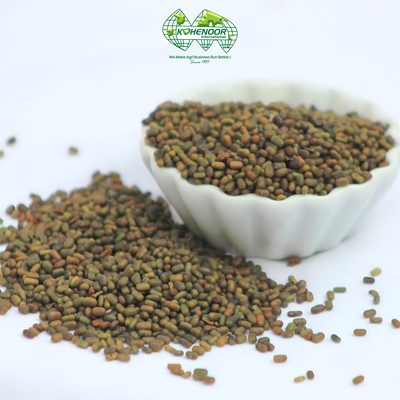
Sesbania (Sesbania bispinosa, S. rostrata, S. sesban) is the most powerful green manure legume available to tropical farmers. Known as dhaincha in South Asia, sesbania across Southeast Asia, and sesbane in Africa, this fast-growing nitrogen fixer has been cultivated for centuries in the world's most productive rice-growing regions. In just 45–60 days, Sesbania produces 15–40 tonnes of fresh biomass per hectare while fixing 80–200 kg of atmospheric nitrogen — the equivalent of 175–435 kg of urea fertilizer.
For tropical farmers facing rising fertilizer costs, depleted soils, and pressure to adopt sustainable practices, Sesbania offers a natural, proven solution that simultaneously builds soil organic matter, breaks hardpan compaction with its deep taproot, and provides a nutrient-rich mulch for the following cash crop. This comprehensive guide covers everything you need to know about growing Sesbania seeds in tropical and subtropical countries.
Why Sesbania Is the #1 Green Manure for Tropical Agriculture
Sesbania dominates tropical green manure systems for good reason. No other leguminous cover crop matches its combination of rapid growth, extreme nitrogen fixation, waterlogging tolerance, and easy incorporation. Here is what sets it apart from other tropical green manure options:
Sesbania at a Glance — Key Performance Data
- N-Fixation: 80–200 kg N/ha (species-dependent)
- Biomass: 15–40 t fresh matter/ha in 45–60 days
- Growth rate: Up to 5 cm/day under optimal tropical conditions
- Taproot: Penetrates to 1.5–2.0 m depth → breaks hardpan
- C/N ratio: 12–18:1 → rapid mineralization after incorporation
- Waterlogging: Tolerant; S. rostrata thrives in flooded paddies
The speed of biomass accumulation is particularly remarkable. Under tropical conditions (25–35°C daytime temperatures, adequate moisture), Sesbania can grow 3–5 cm per day, reaching 1.5–2.5 meters height within 8 weeks. This explosive growth smothers weeds, prevents soil erosion during monsoon rains, and generates the maximum amount of green manure in the shortest possible time window between cash crops.
The favorable C/N ratio of 12–18:1 is critical. Unlike cereal straw (C/N ratio 80–100:1) which temporarily immobilizes soil nitrogen when incorporated, Sesbania biomass decomposes rapidly and releases plant-available nitrogen within 2–4 weeks of incorporation — perfectly timed for the transplanting of the following rice or sugarcane crop.
Tropical Countries Where Sesbania Excels
Sesbania thrives across the entire tropical belt, from the equator to approximately 30° latitude in both hemispheres. The following table summarizes performance and traditional use patterns by region:
| Region / Country | Primary Species | Main Use | Typical Yield (t FM/ha) | Growing Season |
|---|---|---|---|---|
| India (Punjab, UP, Bihar) | S. bispinosa | Pre-rice green manure | 20–35 | Apr–Jun (kharif prep) |
| Pakistan (Sindh, Punjab) | S. bispinosa | Rice & sugarcane rotation | 18–30 | Mar–Jun |
| Bangladesh | S. bispinosa, S. rostrata | Aman/Boro rice systems | 15–25 | Feb–Apr, Sep–Nov |
| Thailand, Vietnam | S. rostrata | Flooded rice paddies | 20–40 | Year-round (2–3 cycles) |
| Philippines, Indonesia | S. sesban, S. grandiflora | Agroforestry & alley cropping | 15–25 | Year-round |
| Nigeria, Kenya, Tanzania | S. sesban | Improved fallow & fodder | 12–20 | Wet season |
| Brazil, Colombia | S. bispinosa | Sugarcane intercrop & soil restoration | 15–30 | Oct–Mar (summer) |
| Egypt (Nile Delta) | S. sesban | Saline soil reclamation | 10–18 | Apr–Sep |
Need Sesbania Seeds for Your Farm or Project?
We supply ISTA-certified Sesbania seeds (bispinosa, rostrata, sesban) from 25 kg to full container loads. Phytosanitary certificate & air/sea freight worldwide.
Request a QuoteClimate & Soil Requirements
Sesbania is remarkably adaptable, but optimal performance requires specific growing conditions. Understanding these parameters helps farmers maximize nitrogen fixation and biomass production.
| Parameter | Optimum Range | Tolerance Limits |
|---|---|---|
| Air temperature | 25–35°C | Survives 10–45°C; frost kills immediately |
| Soil temperature (germination) | ≥ 20°C | Poor germination below 15°C |
| Rainfall / irrigation | 500–1500 mm during growth | Tolerates brief drought; thrives in waterlogged soils |
| Soil pH | 6.0–7.5 | Tolerant of 4.5–9.0 (acidic to alkaline) |
| Salinity tolerance | Moderate (up to 6 dS/m) | S. sesban tolerates up to 10 dS/m — ideal for coastal reclamation |
| Soil type | Loam to clay loam | Grows on sand, clay, and degraded soils; poor on pure gravel |
| Altitude | 0–1000 m ASL | Reduced performance above 1500 m due to lower temperatures |
One of Sesbania’s greatest strengths in tropical agriculture is its tolerance of waterlogged and saline soils. In the Indus Delta (Pakistan), Nile Delta (Egypt), and coastal Bangladesh, Sesbania is one of the few green manure crops that can grow productively on salt-affected land while simultaneously reducing soil salinity through organic matter addition and improved soil structure.
Planting Methods & Seed Treatment
Sesbania seeds have a hard seed coat that requires scarification to ensure uniform germination. Without treatment, germination rates typically range from 40–60%. Proper scarification raises this to 85–95%.
Scarification Methods
- Hot water treatment (recommended): Soak seeds in water at 80°C for 5 minutes, then allow to cool naturally overnight. Drain and sow within 24 hours.
- Mechanical scarification: Lightly abrade seed coat using sandpaper drum or concrete mixer with abrasive lining. Suitable for large-scale operations.
- Acid scarification: Immerse in concentrated sulfuric acid for 10–15 minutes (commercial/research use only). Highest germination rates but requires safety equipment.
Inoculation
Sesbania forms symbiosis with Azorhizobium caulinodans (stem-nodulating species) and various Rhizobium strains (root nodulation). In fields where Sesbania has been grown before, native rhizobia populations are usually adequate. For first-time planting on a field, inoculation with the correct strain is strongly recommended to maximize nitrogen fixation. Inoculant is available from specialized agricultural laboratories and seed treatment companies.
Sowing Rates & Methods
| Sowing Method | Rate (kg/ha) | Row Spacing | Best For |
|---|---|---|---|
| Broadcast | 25–40 | N/A | Quick coverage, weed suppression |
| Drill / line sowing | 15–25 | 25–30 cm | Mechanized incorporation |
| Relay / intercrop with rice | 20–30 | Between rice rows | No separate growing window needed |
| Alley cropping (agroforestry) | 5–10 | 3–5 m alleys | Perennial systems, hedgerow pruning |
Incorporation & Effect on Following Crops
The optimal incorporation timing for Sesbania is at 50% flowering stage, typically 45–60 days after sowing. At this point, nitrogen content of the biomass is 2.8–3.5% with the most favorable C/N ratio for rapid mineralization. Incorporating too early wastes biomass potential; incorporating too late increases the C/N ratio and slows nitrogen release.
Incorporation Methods
- Disc plowing / rotavator: The most common method in mechanized tropical farming. One or two passes with a disc plow incorporates the biomass effectively. Wait 7–10 days before transplanting rice to allow initial decomposition.
- Flooding and trampling: Traditional method in rice paddies. Flood the field, then trample the Sesbania with a tractor or buffalo. The waterlogged biomass decomposes within 2–3 weeks. Particularly effective for S. rostrata.
- Roller-crimper: For conservation tillage systems. Roll and crimp the standing Sesbania to create a mulch layer, then direct-seed the following crop through the mulch.
- Cut and carry: Cut the Sesbania and apply as mulch around the base of fruit trees, sugarcane, or in vegetable beds. This preserves soil structure while still providing nitrogen-rich organic matter.
Nitrogen Release Timeline
After incorporation, Sesbania nitrogen becomes available to the following crop in a predictable pattern:
- Week 1–2: Rapid initial decomposition; 20–30% of total N released
- Week 3–4: Peak N availability; 40–50% cumulative release (coincides with rice tillering)
- Week 5–8: Gradual release of remaining N; supports grain filling
- Beyond 8 weeks: Residual organic N contributes to soil organic matter pool
Research from IRRI (International Rice Research Institute) and ICAR (Indian Council of Agricultural Research) consistently shows that Sesbania green manure can replace 50–100% of the recommended urea application for the following rice crop, while simultaneously improving soil organic carbon by 0.1–0.3% per year with continuous use.
Technical Data Sheet Available
Get detailed specifications on germination rates, purity analysis, and agronomic recommendations for your specific region.
Request Technical Data SheetSesbania in Rice-Based Cropping Systems
The rice-Sesbania rotation is the most widely practiced and researched green manure system in tropical agriculture. Millions of hectares across India, Pakistan, Bangladesh, Vietnam, and Thailand use Sesbania as a pre-rice green manure to reduce dependence on synthetic nitrogen fertilizer.
Pre-Rice Green Manure (Most Common)
Sow Sesbania immediately after the harvest of the previous rabi crop (wheat/mustard/potato) or as soon as pre-monsoon rains begin. Allow 45–60 days of growth, incorporate with disc plow, flood the field, and transplant rice 7–14 days later. This system consistently delivers rice yield increases of 15–30% compared to unfertilized control plots, and performs comparably to 60–120 kg N/ha as urea.
Relay Cropping with Rice
In areas with a short turnaround window, Sesbania can be broadcast into standing rice 3–4 weeks before harvest. After rice harvest, the Sesbania continues growing through the fallow period and is incorporated before the next rice planting. This eliminates the need for a dedicated green manure window.
Comparison: Sesbania vs. Other Tropical Green Manure Crops
| Green Manure Crop | N-Fixation (kg/ha) | Days to Incorporation | Waterlog Tolerance | Seed Cost Relative |
|---|---|---|---|---|
| Sesbania bispinosa | 80–200 | 45–60 | High | Low |
| Sesbania rostrata | 150–300 | 45–55 | Very High | Medium |
| Crotalaria juncea (Sunn hemp) | 60–150 | 60–90 | Low | Medium |
| Vigna unguiculata (Cowpea) | 40–100 | 45–60 | Low | High |
| Tephrosia purpurea | 50–80 | 90–120 | Low | Medium |
| Azolla (fern) | 20–40 | 21–30 | Very High | High (labor-intensive) |
Sesbania offers the best ratio of nitrogen fixed per dollar of seed cost. The combination of low seed cost, rapid growth, high N-fixation, and waterlogging tolerance makes it the undisputed champion of tropical green manure crops.
Beyond Rice — Other Tropical Applications
Sugarcane Intercropping
In India (Uttar Pradesh, Maharashtra) and Brazil (São Paulo), Sesbania is increasingly used as an intercrop in sugarcane plantations. Sown between cane rows at establishment, Sesbania provides nitrogen and weed suppression during the critical first 60–90 days while the cane canopy closes. The Sesbania is then slashed or naturally shaded out, contributing its biomass to the soil.
Soil Reclamation & Degraded Land Restoration
Sesbania is one of the few green manure crops that can establish on severely degraded, saline, or alkaline soils. In the Thar Desert margins (Pakistan/India), coastal saline tracts, and post-mining rehabilitation sites, Sesbania is used as a pioneer species to build organic matter, improve soil structure, and create conditions for subsequent cropping.
Agroforestry & Hedgerow Systems
Sesbania sesban and S. grandiflora are used as fast-growing hedgerow species in tropical agroforestry. Regular pruning of the hedgerows provides nitrogen-rich mulch for adjacent crop rows, fodder for livestock, and firewood. In East Africa (Kenya, Tanzania), Sesbania hedgerow systems have been shown to increase maize yields by 30–50% while providing additional income from fodder and fuel.
Fodder & Livestock Feed
Sesbania leaves contain 20–25% crude protein, making them an excellent supplement to tropical livestock diets. In cut-and-carry systems, farmers harvest the top growth for animal feed while the roots continue fixing nitrogen in the soil. S. grandiflora (agathi/vegetable hummingbird) flowers and young pods are also consumed as human food in Southeast Asia and South India.
Seed Quality & What to Look For
The quality of Sesbania seed directly impacts field performance. Poor-quality seed with low germination rates means higher seeding costs, uneven stands, and suboptimal biomass production. Here is what to demand from your seed supplier:
| Quality Parameter | Minimum Standard | Kohenoor Guarantee |
|---|---|---|
| Purity | ≥ 95% | ≥ 98% |
| Germination rate | ≥ 70% | ≥ 80% (ISTA-tested) |
| Moisture content | ≤ 12% | ≤ 10% |
| Weed seeds | ≤ 2% | ≤ 0.5% |
| Inert matter | ≤ 3% | ≤ 1.5% |
At Kohenoor International, every lot of Sesbania seed is tested at an ISTA-accredited laboratory before shipment. Each consignment includes an ISTA certificate, phytosanitary certificate, and certificate of origin. We have been exporting agricultural seeds from Hyderabad, Pakistan since 1957 and serve buyers in over 30 countries across Asia, Africa, the Middle East, and Latin America.
Import Regulations & Shipping
Importing Sesbania seed into most tropical countries is straightforward, as it is a recognized agricultural crop with no invasive species restrictions in its native range. However, every importing country requires specific documentation:
- Phytosanitary Certificate: Issued by the Pakistan Department of Plant Protection. Confirms the seed lot is free from quarantine pests and diseases.
- Certificate of Origin: Issued by the Hyderabad Chamber of Commerce. Required for customs clearance in most countries.
- ISTA Test Report: International Seed Testing Association analysis covering purity, germination, moisture, and weed seed content.
- Import Permit: Some countries (Australia, New Zealand, Japan, EU member states) require an advance import permit. We assist buyers with the application process.
We ship worldwide via air freight (5–7 days) or sea freight (15–35 days depending on destination). Minimum order quantity is 25 MT (1 container) for air freight samples, with full container loads (18–20 MT) available for bulk buyers.
Frequently Asked Questions
Which Sesbania species is best for tropical green manure?
How much nitrogen does Sesbania fix per hectare in tropical conditions?
When should I plant Sesbania before rice in tropical Asia?
What is the recommended seeding rate for Sesbania?
Can I buy Sesbania seeds in bulk for export?
Ready to Order Premium Sesbania Seeds?
Kohenoor International — trusted agricultural exporter since 1957. ISTA-certified seed, phytosanitary documentation, worldwide shipping.
Get a Free Quote TodayOr WhatsApp us: +92-310-4929292